On-Site Power Generation in Mons: Another Milestone Towards AISIN Europe’s Carbon Neutrality Target
Home » Sustainability » European CSR initiatives » On-Site Power Generation in Mons: Another Milestone Towards AISIN Europe’s Carbon Neutrality Target
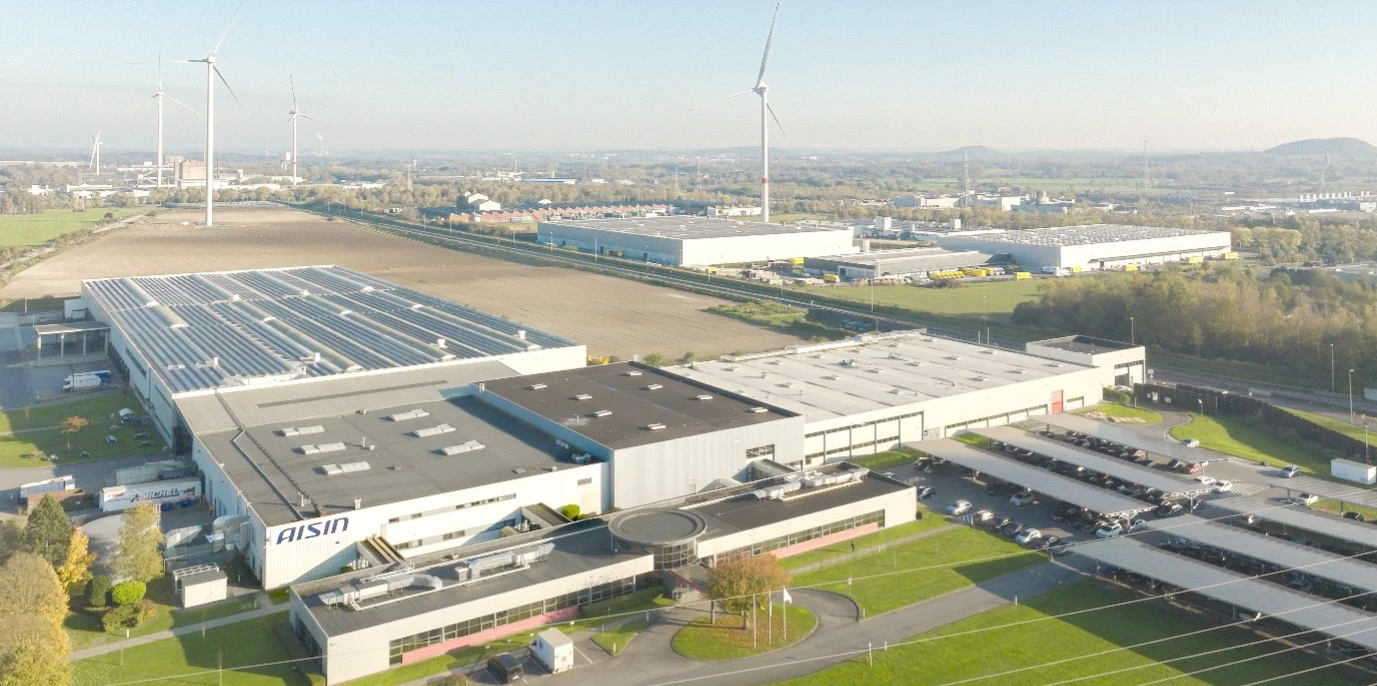
AISIN Group is promoting Carbon Neutral activities on a global scale, aiming to achieve carbon neutrality over the entire life cycle by 2050. In this article, we are introducing our activities in Europe and the newest launched project: a wind turbine in Mons, Belgium.
AISIN Europe, headquartered in Braine l’Alleud, Belgium, is the subsidiary of AISIN CORPORATION and regroups 4 production sites, 3 sales and 7 R&D offices. AISIN Europe sells locally manufactured body and powertrain parts as well as imported transmissions and chassis-related products to all major car manufacturers with European production facilities. Customers include BMW, Hyundai, JLR, Renault-Nissan, Stellantis, Toyota, Volvo, VW, and others.
AISIN Europe Mons site: at the forefront of a Sustainable future
AISIN Europe has been promoting and implementing projects, such as geothermal energy, solar panels installation and harnessing wind power, with the aim of achieving Carbon Neutrality across the European sites.
Between 2014 and 2024, the AISIN Europe production site in Mons has taken significant steps towards carbon neutrality over the years. One of the first projects was to adopt geothermal energy in 2014. Three years later, 4,300 solar panels were installed on site and in 2024 additional solar panels were installed to cover the car parking.
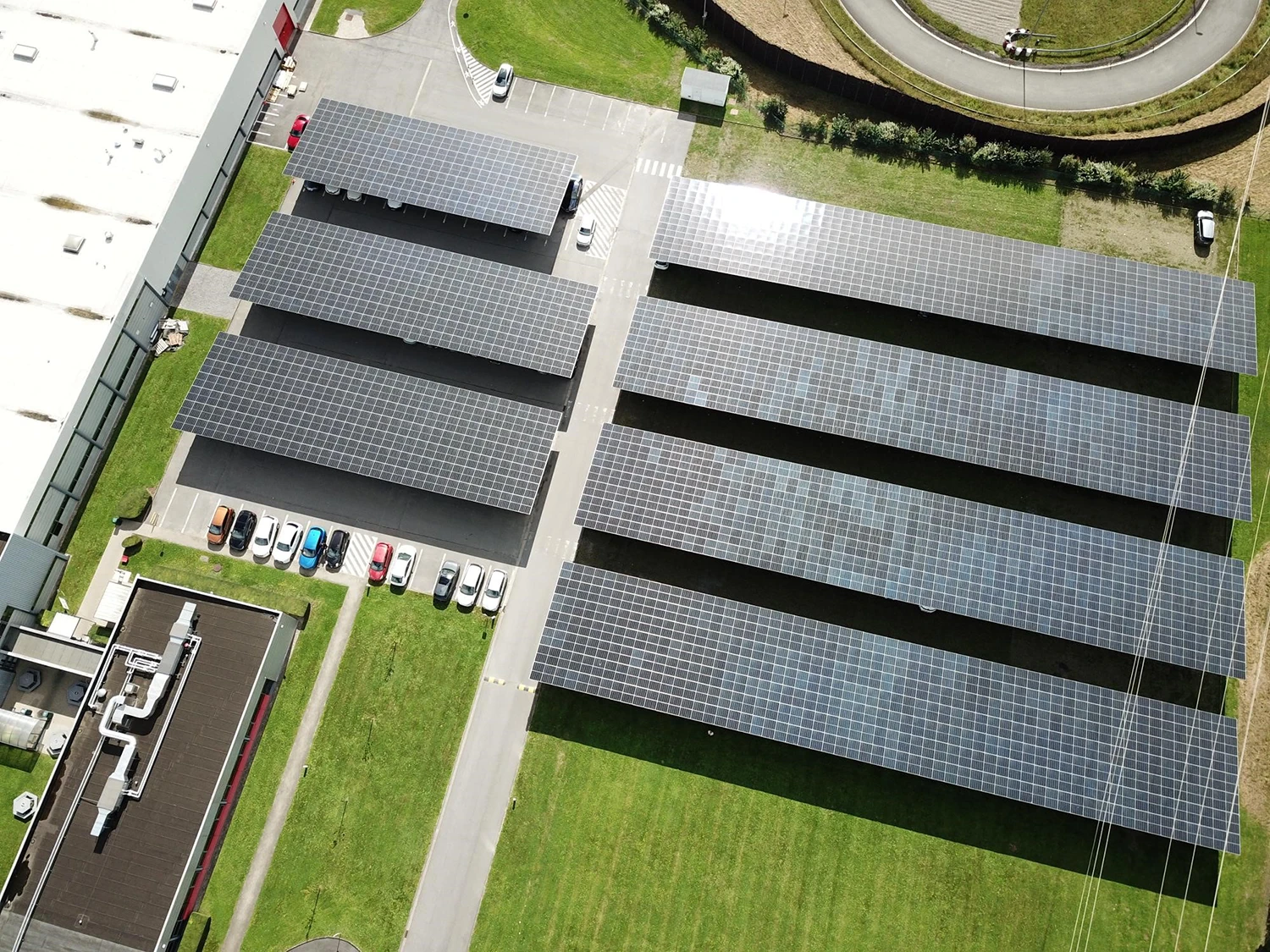
Parking covered with Solar Panels (2024)
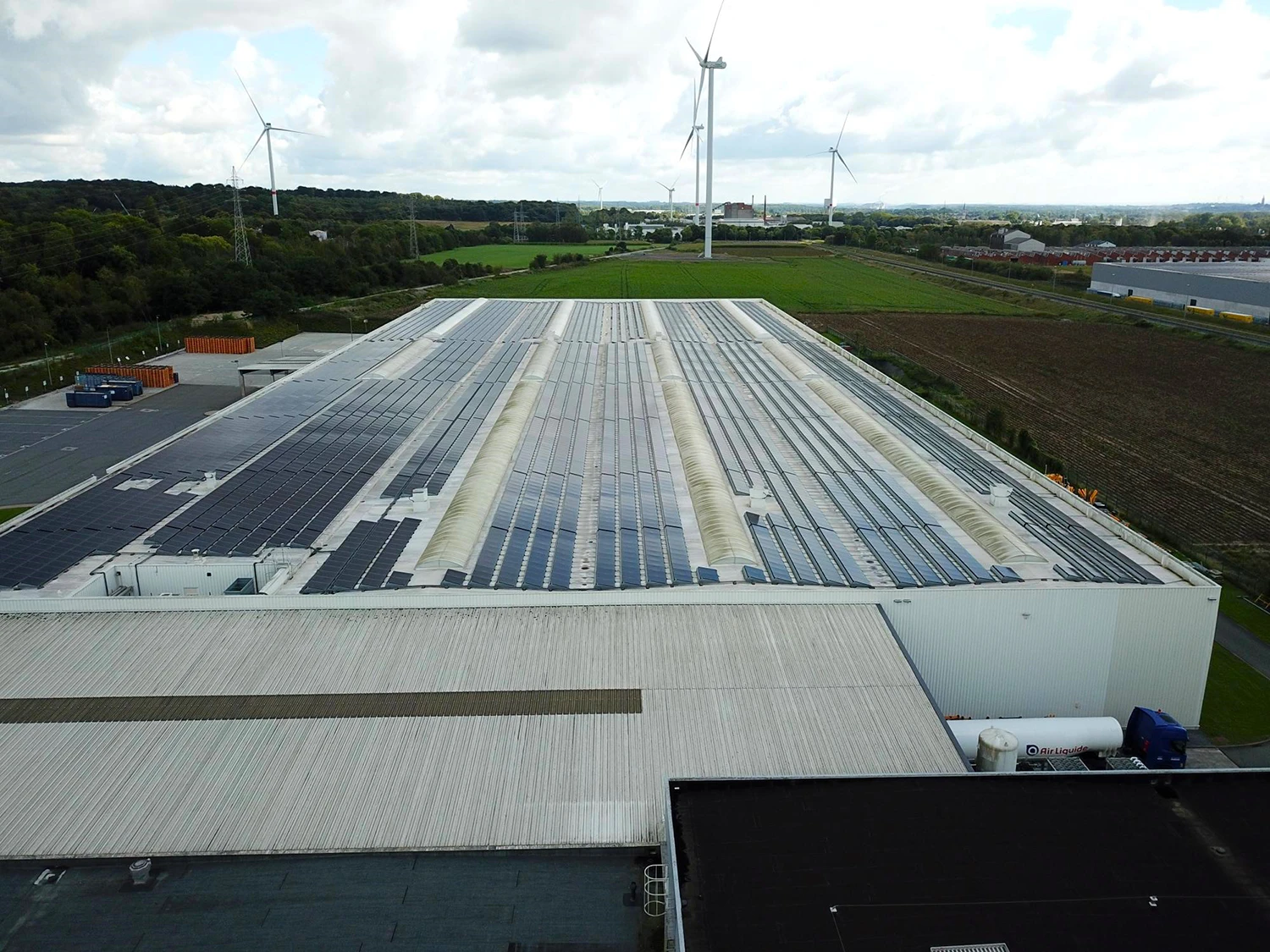
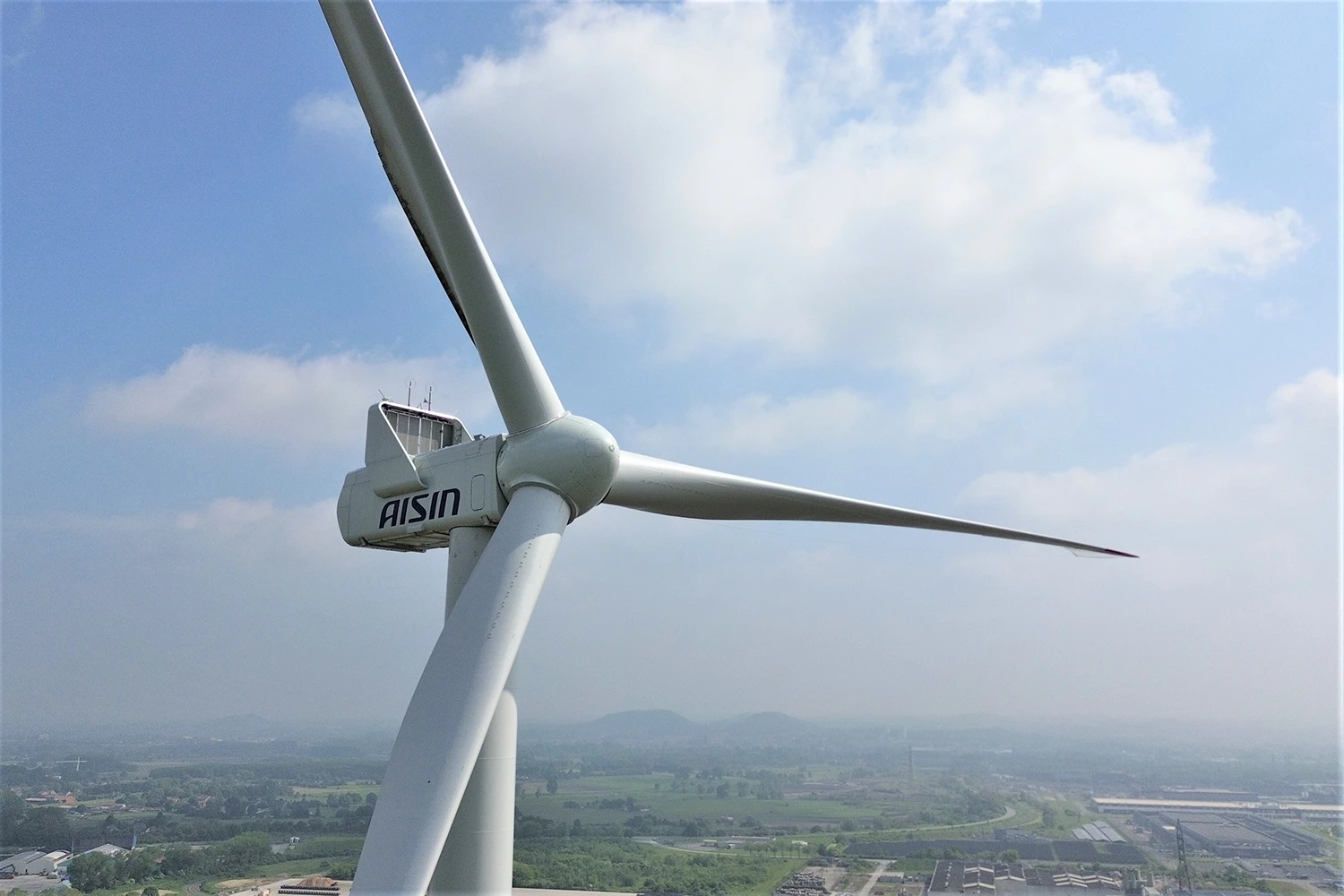
Altogether, these initiatives are reducing the Mons site’s carbon footprint (scope 1 & 2) by approximately 1,223 tons of CO2/year. This is equivalent to approximately 160 households’ energy use for one year and would require about 7,300 mature trees to absorb. AISIN Mons is the first AISIN Group production site to cover its energy needs from 100% locally generated renewable sources. This is a significant milestone in advancing AISIN Europe’s sustainability goals to offset all its CO2 emissions by 2030 (scope 1 & 2).
Overcoming Challenges
While the seeds of the wind turbine project were planted many years ago, the first major steps were taken in 2017, when AISIN Europe began the search for the right partner to make this happen. It was with this assignment that Fabian got involved in the wind turbine project.
Finding the right partner has proven to be a much more complex task than imagined, because it quickly became clear that it was not only about finding an energy supplier willing to take up the challenge. The relationship with the Belgian government had to be managed as well. Success hinged on building strong, dependable partnerships.

In 2021, the activity on this project surged again. With the help of IDEA, who is promoting sustainable projects in the Belgian region of Wallonia and who played an important role in connecting the government with the industry actors, AISIN and Luminus entered into a partnership. AISIN would provide the land for the wind turbine construction and maintain a coordinating role in the project’s implementation. Luminus, the energy provider, would oversee the construction, the connection to the grid and would be responsible for the future maintenance of the wind turbine until its end of life.
With the commercial agreements in place, it was time to plan concrete actions. At this point, Fabian identified a gap in the team’s resources: they needed someone with expert technical knowledge in the field of electricity. Enter Jerome Gaspard.

Reliable partnerships - the key to success
Fabian and Jerome both acknowledged that building and managing relationships was the most critical skill in this project. “One hears this everywhere: clear communication is everything; and in a technical environment, where we talk in numbers and facts one would expect it to be easy to communicate clearly… [Fabian and Jerome both shake their heads] it is not.”
Jerome remembers the difficulty in reaching the same understanding between partners and experts, within the tight timeframe. Working for a Japanese company, Jerome was used to situations where decisions required the consensus of the entire team. He could leverage some of the communication techniques he had learned and apply them to the relationship with the partners. “It was a challenge to handle these delicate moments while maintaining the good relationship. Everyone is an expert in their own right, and the last thing you want to do is undermine anyone” remembers Jerome.
There were many instances where the time invested in building the relationship with the partners paid off, but Jerome remembers one moment in particular: the replacement of the high-voltage cabin. This operation meant disconnecting the entire site from power and then reconnecting it to the new cabin. It has major implications for IT, production, maintenance and other departments. Jerome explains: “It was a stressful experience. We were running the risk of stopping production completely. The servers could shut down and not restart. The machines could malfunction when rebooting.
The key to success turned out to be clear internal directions and coordination. “We stated everything clearly and repeatedly, addressed departments and members separately, and made sure nobody was forgotten. With the input of all departments, we created a thorough back-up plan for a smooth production ramp-down & ramp-back-up”. Thanks to this preparation work, all the involved departments knew what to do and what to expect. There were no issues, and production resumed according to plan.

“Our high-voltage cabin partner was extremely reliable; same with Luminus experts. After working with them for such a long time, we knew we were in good hands.” Jerome said. “We didn’t only manage these relationships, we build them. We treated our suppliers as partners, not as service providers. I think this made the biggest difference in how they supported us in critical moments”, Fabian added.
It took a lot of patience and resilience to complete this project. “Now we are more knowledgeable, and we hope to be of service to other AISIN locations who would be interested in implementing a similar initiative”, concluded Fabian.
Future vision
The initiatives related to Carbon Neutrality in Mons site don’t stop with the wind turbine. As a next step Fabian’s team is looking into batteries that can store the excess electricity produced by the wind turbine, so that it can be used at peak times rather than fed back to the grid. Additionally, a Virtual Power Purchase Agreement is being considered so that other European sites can benefit from the electricity produced in Mons.
Carbon Neutral initiatives are also underway at other AISIN Europe production sites: in Czech Republic, UK and Türkiye. In Czech Republic, where we use melting furnaces, we are looking into sustainable alternatives for gas, while in Türkiye there are plans to build a solar farm. These are all steps that support our 2025 goal to source 100% of the energy used in AISIN Europe sites from sustainable sources. On the longer-term, AISIN Europe, including all European sites, are committed to become carbon neutral by 2040.
The activities for Carbon Neutrality and the circular economy are duties of all the members engaged in manufacturing industry. We will promote activities to achieve carbon neutrality at our sites around the world, as in the case of Europe, and deliver beauty to our future earth.